


Investment Strategies
UK Political Drama Adds To Wealth Managers' Worries
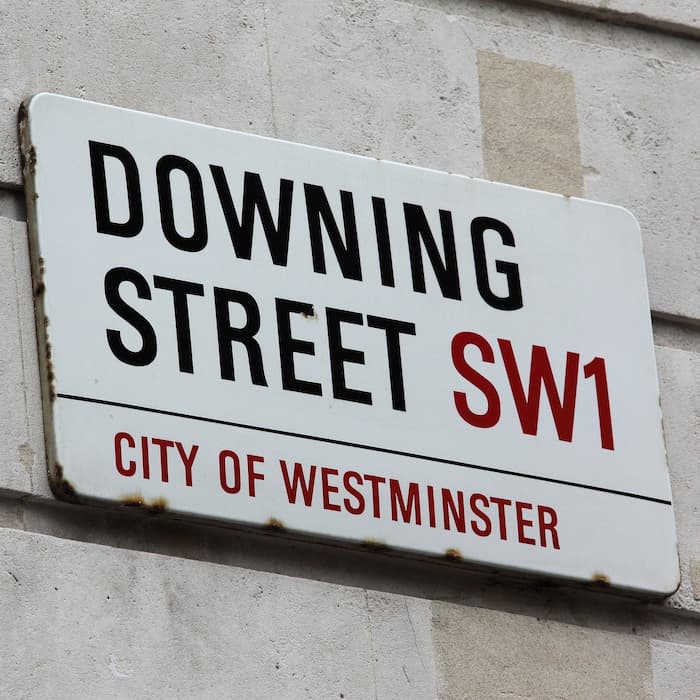
The shifting fortunes of UK politics sees the departure of yet another Prime Minister. Just as Boris Johnson was ousted in 2022, despite his Conservative Party having won a large majority in late 2019, Sir Keir Starmer suffered a similar fate, even though his Labour Party won a crushing majority in 2024.
Sterling slipped and UK government bond yields inched higher on
concerns that a new prime minister – mostly likely the
newly-elected MP Andy Burnham – could boost public spending in a
bid to restore the ruling Labour Party’s fortunes, although his
fiscal room to do so appears limited in the short-run.
Sir Keir Starmer, who led Labour to a 174-seat majority in July
2024, defeating the Conservatives, fell victim to the same
internal political conflicts that had caused the Conservatives
problems during their previous 14 years in office. Burnham,
assuming he becomes prime minister by the start of September,
will be the seventh occupant of Downing Street since David
Cameron 10 years ago.
The changes of prime minister since David Cameron’s resignation
following the Brexit referendum result in 2016 have dented the
UK’s reputation for relative political stability, also
reflecting the fracturing traditional political
allegiances and the rise of populism. Labour's 2024 victory
in the general election was a "loveless
landslide," profiting from anti-Conservative voting across
the country, and the vagaries of the UK's first-past-the-post
electoral system. Reform, a populist Rightwing party, has won
support from former Labour as well as Conservative voters,
particularly on issues such as immigration and Net Zero energy
policy.
Yesterday morning, after Starmer announced his resignation,
10-year gilt yields rose about 10 basis points to above 5.10 per
cent; the 30-year yield also rose, by 13 bps to above 5.8 per
cent. Saxo UK investor strategist, Neil Wilson, said further
rises are likely.
“We could see a blowout in longer-dated gilts if this turns into
a dogfight – political, fiscal and inflationary risks will rise.
Markets tend to dislike a lack of certainty over who runs a
government; the fiscal position is already fragile and likely to
become worse should a left-leaning ticket prioritise spending;
and that makes inflation stickier,” Wilson said. On the currency
front, sterling was under pressure against the dollar, fetching
around $1.3540, and could move to $1.3.
Judging by early reactions, wealth managers regard the
least-worst outcome as an orderly transition, with Burnham
entering Downing Street by September. A political question is how
voters, contemplating yet another PM, will view this outcome.
With his criticisms of “neoliberal” market economics, comments on
reindustrialisation and other points, Burnham comes with an
interventionist message that in some ways fits with the populist
backlash against globalisation that, for example, has an echo
other countries, including the US. He is a former minister in the
era of Tony Blair and Gordon Brown, holding a mix of roles,
including Chief Secretary to the Treasury. He resigned his latest
position as Manchester mayor – a city which he is credited for
helping to boost during his tenure – to contest a seat in
parliament so that he could have a chance to run against Starmer.
Burnham won the Makerfield by-election in the UK northwest last
week by a comfortable margin.
Starmer, a former Director of Public Prosecutions, has seen his
political fortunes nosedive since 2024. Labour lost more than
1,000 seats in local council elections during May – an outcome
seen as the beginning of the end of his time in
office.
A question for wealth managers is how this will affect the
UK economy and financial market. The UK economy is growing
slowly; unemployment is rising and, like other countries, has
been hit by the aftermath of the pandemic and rising oil prices.
But the country isn’t in recession, and its troubles are similar
to those of many of its neighbours.
Burnham is said to favour policies such as reducing business
rates, bringing in a land value tax, hiking capital gains
taxes so that they match income tax rates, and further
squeeze on exemptions from inheritance tax. He faces the risk of
being seen as imprudent – reports say he is, at least for now,
sticking to government borrowing plans.
“Keir Starmer’s resignation means we are facing another period of
political uncertainty. We do not yet know who the next Prime
Minister will be, or what tax policies they will choose to
prioritise. That makes short-term planning more difficult for
people making large financial decisions, particularly those
selling assets, restructuring investments, transferring wealth,
or going through major life events,” Daniel Swift, head of
financial planning, TrinityBridge, said.
“One area to watch closely is capital gains tax. The idea of
aligning CGT rates more closely with income tax has been
discussed before, and any move in that direction would have clear
implications for wealth planning. It would affect the after-tax
return from selling assets and could change the timing of
disposals,” Swift said.
“For anyone already planning to sell assets, this uncertainty
will affect decision-making. Some may look again at timing,
especially if they believe CGT rates could rise under a new
leader. Others may decide that acting too quickly creates its own
risks, particularly when policy details remain unclear. Reports
suggesting that a new leader could be in place by 1 September
still leave a meaningful gap. For households, business owners and
advisors, that is a long period to operate without clarity if
major decisions are already underway,” he continued.
Martin Wolburg, senior economist at Generali Investments, said:
“On policy, Burnham points to a more interventionist and more
regionally-focused model of government, with greater emphasis on
devolution, cost-of-living relief, industrial renewal and
stronger public control in areas such as housing, transport and
utilities. Even so, fiscal constraints remain tight, and his
pledge to respect Labour’s fiscal rules suggests that, for
markets, the key question is likely to be implementation rather
than ideology.
Phineas Hirsch, partner at Payne Hicks Beach, said Burnham
is likely to drive towards a “fairness-first, regionally
redistributive tax agenda; not radically new taxes overnight, but
a stronger push on closing reliefs and tightening wealth
taxation.”
“I suspect we are likely to see continued pressure to raise
revenue from wealth rather than income, meaning HNWIs should
prepare for renewed scrutiny on capital gains, inheritance tax
reliefs, and potentially the introduction of a wealth tax,
despite such taxes proving unsuccessful in other leading
economies,” he said.
“Burnham is somewhat of an unknown quantity at this level of
government, but a continued drive for ‘fairness’ risks coming at
the cost of economic growth,” Hirsch added.
(Editor's comment: Investors seem to be relatively calm about the news, which was not unexpected, but still a jolt when one considers how many occupants of 10 Downing Street there have been since 2016. It is not clear what a Burnham premiership means – with someone such as Wes Streeting (former health minister) as finance minister, perhaps. Burnham, who was a minister under Tony Blair and Gordon Brown, is seen as a man of the Left, albeit with a supposedly "comman man" touch and a record of having led Manchester to relative success as a major UK city. He's made a point about taking certain utilities back into public ownership, building more homes and encouraging industry. How much such ideas can sit alongside the need to control public debt and keep taxes at tolerable levels is an open question. The UK has the highest tax burden overall since WW2. The economy is growing slowly; there is rising youth unemployment and industry has complained of costs such as the Net Zero target for carbon emissions.
Burnham will want to keep the leftwing of his party onside while also competing for the centre ground. Reform, the insurgent rightwing party led by Nigel Farage, has made much of immigration and opposing Net Zero on energy, although its popularity has not continued to rise in recent months; the Conservatives, led by Kemi Badenoch, are not yet seeing a rise in polling support to match the rising profile and voter approval for Badenoch herself. The Tories won a by-election in Scotland last week, where energy policy was a key issue. It is possible that Badenoch's party will start to gain ground, maybe taking the UK back to more familiar territory.
Even so, politics is therefore highly fluid, raising the possibility that no single party will achieve an overall majority in a general election. Much can change between now and the summer of 2029, when a general election has to be held. In the meantime, the international situation remains uncertain and hazardous. A new premier will need to improve relations with European neighbours – if not necessarily reversing Brexit – and must deal with a Trump administration unafraid to speak openly about the UK and its policies. That's a tall order for whoever gets the job.)